I reached out to touch him and I noticed he wasn't hanging out by choice! This the second white spider I had seen around the lamb's ears that day. Do the spiders know they are that color, or are they naturally attracted to it (as I've heard pets may prefer bedding that matches their fur). Actually, this crab spider is supposed to be able to slowly alter its colors to match surrounding plants. This comes in handy because they are slow moving and built to simply wait and grab. They don't have to wait long for a bee in the herb bed!
 Their venom is powerful enough to quickly subdue prey much larger than themselves so they don't wrap it in silk. Prey insects, notably honey bees, butterflies, flies and beetles, are grabbed by the spiders' spiny front legs and immediately bitten on the head area. The venom acts quickly to subdue the prey, which is eaten at once. Venom and digestive juices liquefy the insect's internal tissues, which the spider sucks up, leaving an empty but life-like husk. (...info from various web sites).
Think I'll stick to vegetables... and be more careful when petting the lamb's ears and bees.


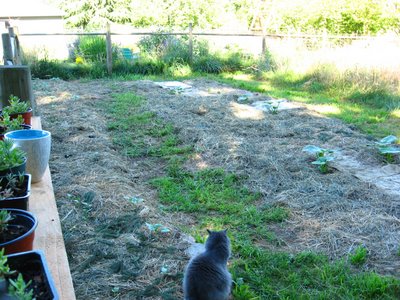 Here is the new area with the mulched pumpkin patch and the gourd/sunflower bed (and Emily the mole watcher) across the fence from the rest of the garden. Dear Husband has added a nice shelf to the fence in this area now, holding here coffee and the lavender starts moved out of the cold frame.